Sensory displayFloatation tank
The purpose of flotation
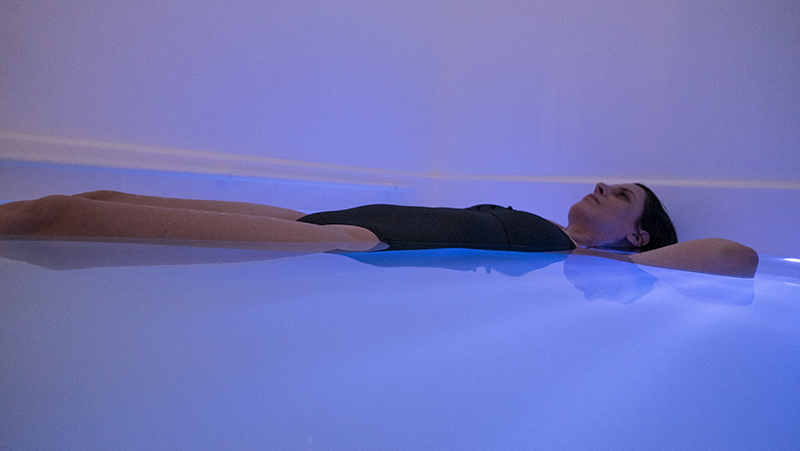
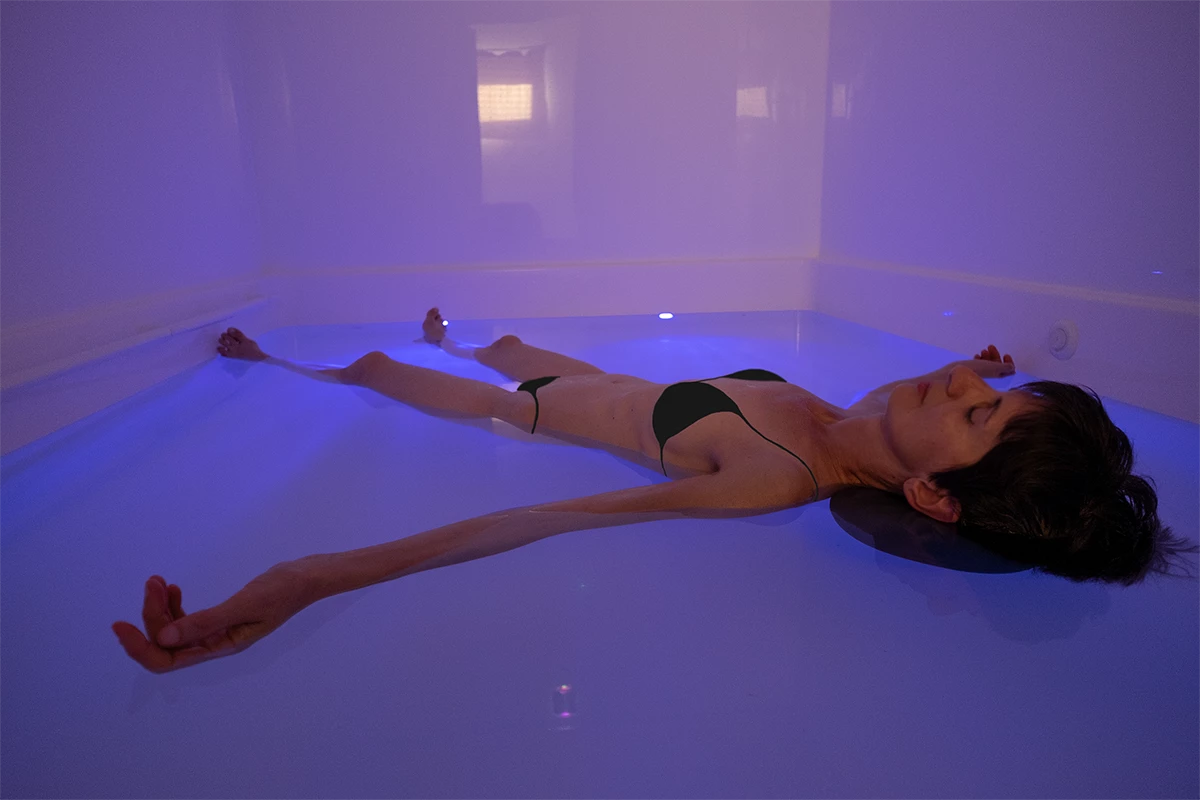
Float effortlessly. That's what a flotation tank does, where the water is saturated with Epsom Salts (Magnesium Sulfate).
Thanks towater heated to between 34 and 35°C (skin temperature), you feel no contact, no pressure on the skin. So, without that pressure on the vertebrae, the body regains its natural position ensuring total freedom of movement and maximum relaxation.
Magnesium is also an intense muscle and brain relaxant. It helps regulate sleep cycles, reducing mild anxiety states.
THE EFFECTS OF FLOTATION
Studies show that aone-hour float session has the same virtues as a 3-hour sleep cycle. Floating significantly reduces blood pressure and heart rate, while promoting the release of endorphins.
-Activation of the immune system.
- Decrease ofadrenalin.
- Improved concentration and creativity.
- Enhances sports performance and recovery.
- Elimination of toxins.
- Recommendation: 1 session every 2 to 3 weeks.
PRECAUTIONS TO TAKE:
No hair coloring within 5 days prior to the session
No shaving or waxing within 4 hours prior to the session
No floating during menstruation and/or after sunburn ( in case of peeling)
Floatation areas
Generally in France, the establishments you may come across use different types of float rooms
- The bubble: This is a small cocoon, similar to a tanning booth, where you are enclosed. Not recommended for claustrophobics.
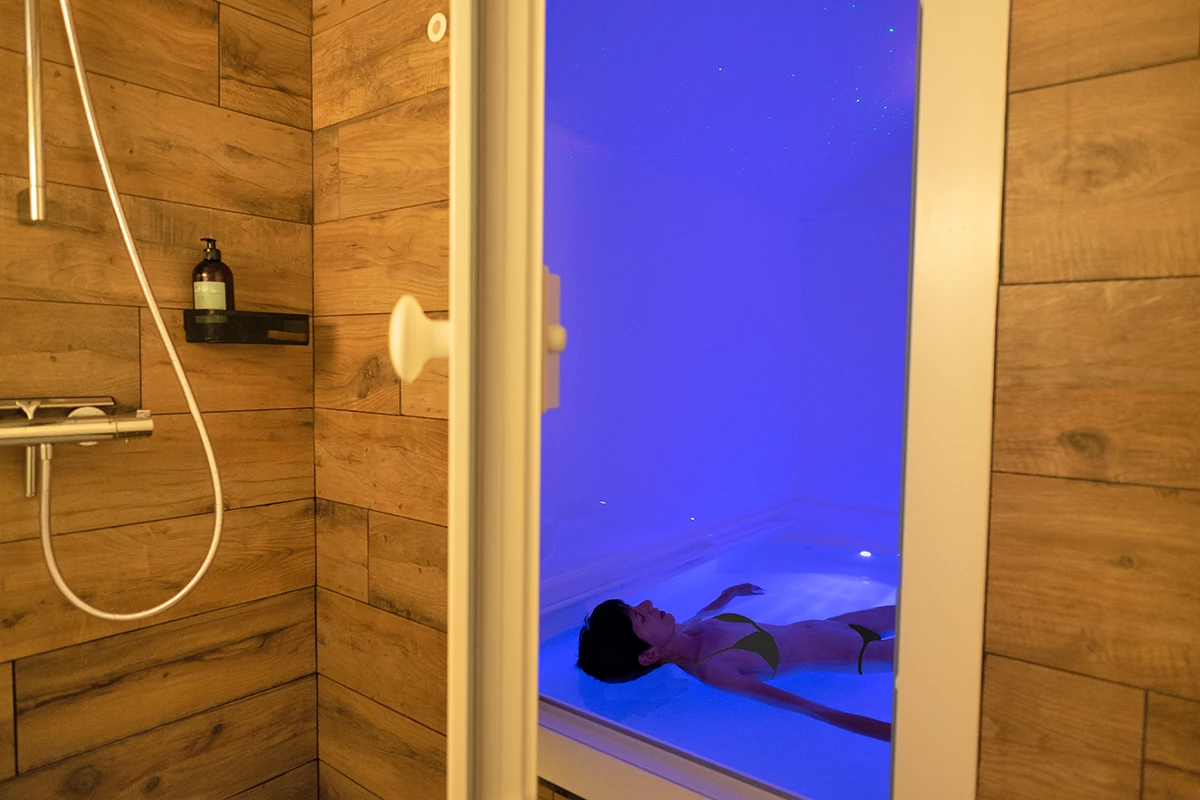
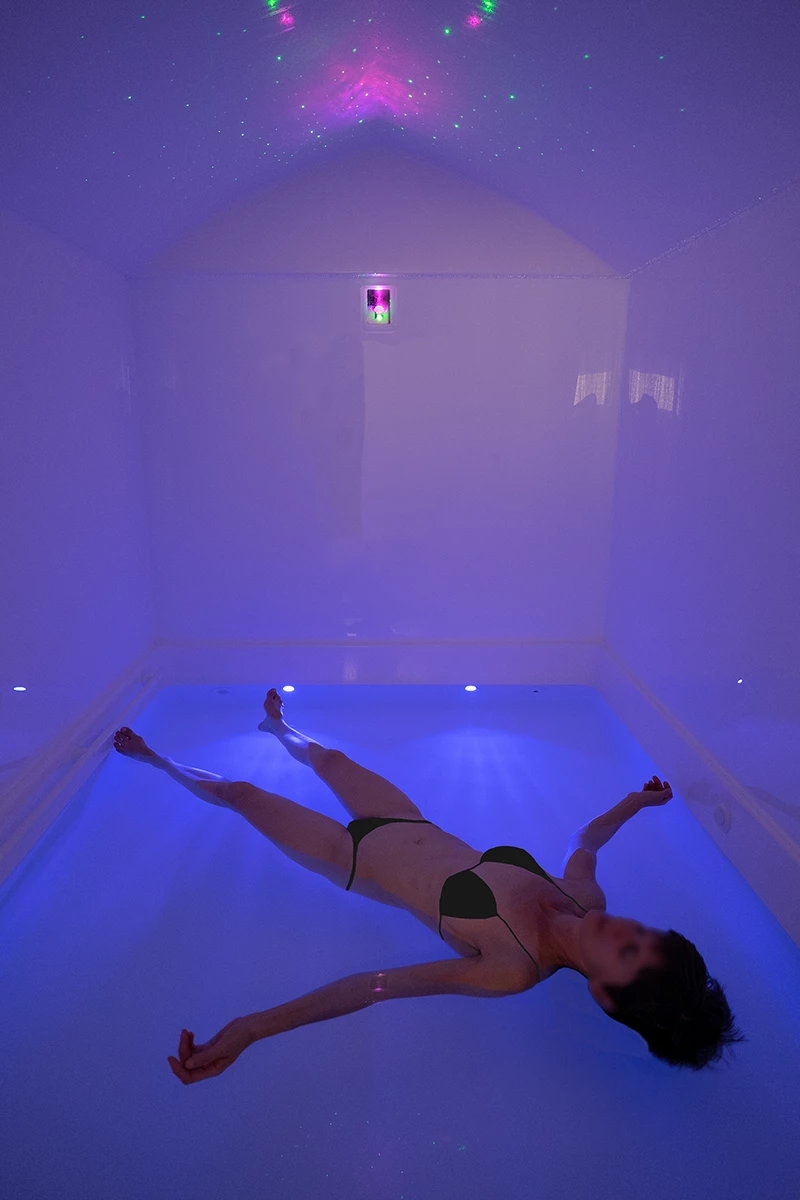
- The basin: this is a cabin, much more spacious for 1 or 2 people (2.50m x 2m). You stand upright (the ceiling is 2.20m high) and enjoy a starry sky-style light show. You are nice and warm and have plenty of headroom to relax. This is the type of facility we offer at the AlpiZen center.
- The float room: like a small indoor swimming pool, it's generally a little cooler here because the pool is located in the middle of the room, with no walls around it.

History
Be cradled by water and floating is a natural part of being being human. We're already in a watery environment long before we're born.
It was while researching meditation that Prof. John Cunningham Lilly realized that thesensory isolation afforded by floating could helpachieve the ultimate in relaxation. The flotation tank was introduced in 1965.
Depending on our activity, the rhythm of brain waves varies: wakefulness, sleep, activity... When body and mind are at rest rest that brain intensity is highest.
The aim of floating is to reach a level of relaxation equivalent to REM sleep or meditation. meditation in which you find yourself for a few minutes waking up or when falling asleep or in certain phases of sleep..
The benefits of a floatation session
For the body
-
Reduces fatigue and muscular and nervous tension
-
Stimulates the immune system
-
Reduces edema, inflammation and blood pressure
-
Stimulates endorphin secretion
-
Speeds recovery after exercise
-
Reduces the frequency and intensity of headaches and migraines
For the mind
-
Reduces feelings of anxiety and general stress
-
Promotes quality sleep
-
Regulates mood
-
Reduces mental hyperactivity
-
Enhances creativity
-
Facilitates meditative state
Duration = 1h